Homeowner guide
Storm and wind damage: missing shingles and what to do next
Missing or lifted shingles, hail bruises, dented vents and debris. How to check safely from the ground and handle the insurance side.
Safety first after a storm: stay away from downed power lines and call AES Indiana or your utility. Don't climb on a wet, icy or damaged roof. Most damage can be spotted from the ground or with binoculars.
Indianapolis sees its share of severe thunderstorms, straight-line winds and hail, mostly in spring and summer. A strong storm can lift or tear off shingles, bruise them with hail, dent metal vents and gutters, and drop branches on the roof. Some damage is obvious the next morning. Some, like hail bruising or shingles whose seal was broken, doesn't leak until months later.
What storm damage looks like
Wind damage
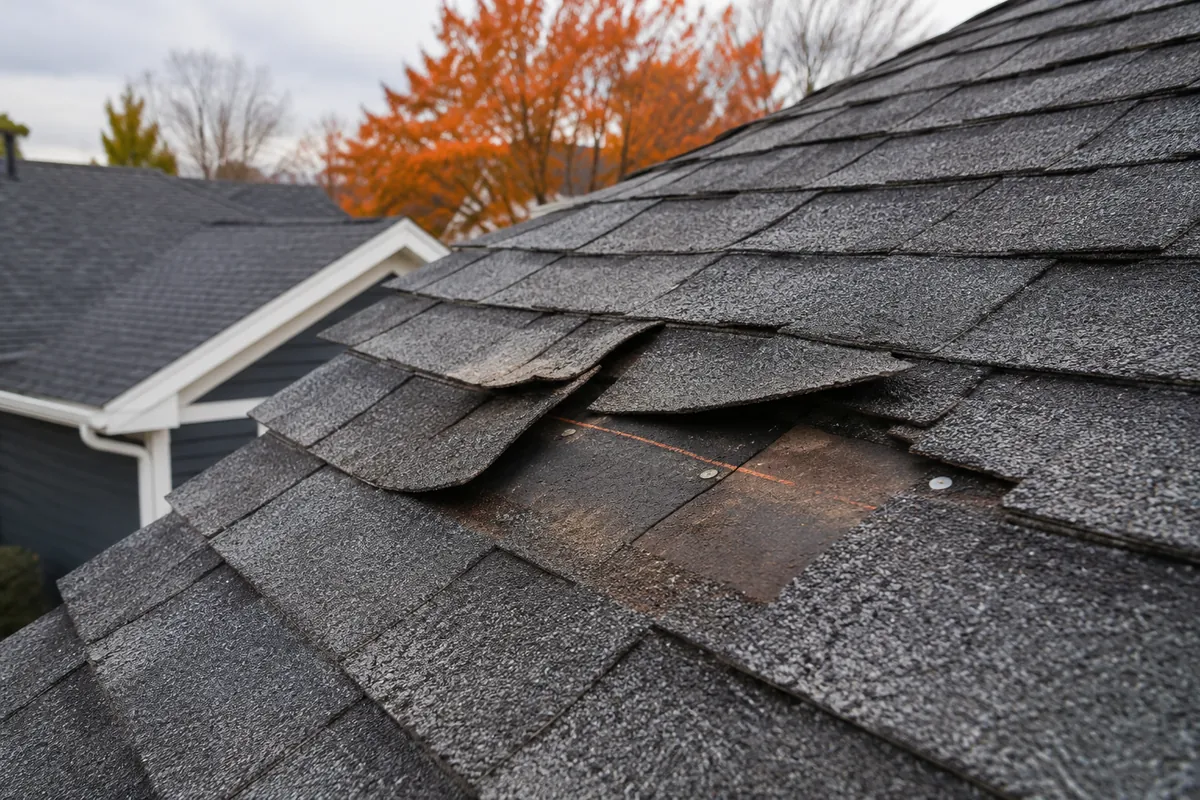
- Missing shingles or bare spots showing dark underlayment or wood
- Shingles that are creased, lifted or flapping
- Ridge caps blown off the peak
- Shingle pieces in the yard or gutters
- Loose flashing, drip edge or gutters
Hail damage
- Dark spots where granules were knocked off
- Soft "bruises" in the shingle mat
- Dents in metal vents, gutters, downspouts and AC fins
- Heavy granules at downspout outlets
- Cracked skylights or broken vent covers
Check from the ground
- Walk around the house and look at every slope you can see. Binoculars help. Look for gaps in the shingle pattern, color changes, and anything hanging off the edge.
- Check the "soft metals": gutters, downspouts, mailbox, grill lid, AC unit. Hail dents there suggest the roof was hit too.
- Look in the attic for daylight, wet spots or new stains.
- Photograph everything with dates: wide shots of each side of the house plus close-ups of damage, debris and anything wet inside.
- Cover openings if it's safe. A roofer can tarp missing sections so the next rain doesn't do more damage. Keep receipts; reasonable steps to prevent further damage are usually expected by insurers.
Insurance: how roof claims generally work
Every policy is different, so read yours or call your agent. In general:
- Report damage promptly. Policies usually require timely notice, and waiting can make it harder to prove the storm caused the damage.
- Know your deductible. Many policies have a separate, higher deductible for wind or hail, sometimes a percentage of your home's insured value.
- Replacement cost vs. actual cash value. Replacement-cost coverage pays to replace damaged roofing; actual-cash-value coverage subtracts depreciation for the roof's age. Some insurers hold back part of the payment until the work is done.
- The adjuster decides coverage. It's smart to have your own roofer there during the adjuster's inspection to point out damage, but your roofer can't negotiate your claim for you.
- Matching. If your shingles are discontinued, ask your insurer how they handle matching on a partial repair.
Your rights under Indiana law
Indiana's home improvement contract law (Indiana Code 24-5-11) covers roofing work on homes. Among other things:
- Roofing contracts over $150 must be in writing, with a description of the work, the materials, the price and the contractor's contact information.
- If your roof work is being paid through an insurance claim and your insurer tells you in writing that all or part of the claim isn't covered, you generally have until midnight of the third business day after that notice to cancel the contract. The contractor must tell you about this right in the contract.
- A roofing contractor is not allowed to act as your public adjuster or negotiate your claim with your insurer on your behalf.
Separately, Indiana's home solicitation sales law generally gives you three business days to cancel a sale that was made at your home, such as one from a door-to-door salesperson. This is general information, not legal advice; the Indiana Attorney General's Consumer Protection Division can answer questions about your situation.
How to avoid storm chasers
After big storms, out-of-town crews knock on doors across Marion and the surrounding counties. Some do fine work; others vanish when the warranty matters. Be cautious if someone:
- Shows up uninvited and says your roof "definitely" needs replacing before looking closely.
- Asks you to sign right away, or to sign a form that lets them deal with your insurance company.
- Offers to "cover your deductible." Waiving or rebating a deductible to win a claim job can be insurance fraud.
- Wants a large payment up front, or cash only.
- Has no local address, no City of Indianapolis contractor license or local registration, and no proof of insurance.
When in doubt, get a second inspection from a local roofer. Request an inspection and include photos if you have them.
Updated November 22, 2026. General information for homeowners, not legal or insurance advice. Your roofer, insurer or attorney can advise on your situation.